Carbon Guardians
Carbon
guardians

Allies in the Fight Against Climate Change
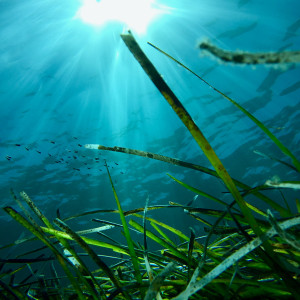
Seagrasses are among the most effective plants on the planet at capturing and storing carbon. This carbon, stored in marine sediments, has its own name: blue carbon. And its role in combating climate change is far greater than these plants’ size would suggest.
Small plants, huge impact
Seagrass beds cover less than 0.2% of the ocean floor, but are responsible for more than 10% of all the carbon sequestered in marine sediments each year. This is an extraordinary proportion, placing these plants among the world’s most efficient ecosystems for carbon storage.
Blue Carbon
The ocean’s power to regulate the climate
The climate is changing, and nature can help
Climate change is one of humanity’s greatest challenges. Burning fossil fuels releases CO₂ into the atmosphere, exacerbating the greenhouse effect and warming the planet. But nature offers powerful solutions: coastal ecosystems naturally capture and store carbon—this is what we call “blue carbon.”
The Blue Forests: The Ocean’s Forgotten Guardians
Beneath the sea’s surface lie forests. Not of trees, but of plants and algae that form dense, productive ecosystems vital to the planet. Mangroves, seagrass beds, seaweed, and seagrass meadows are the so-called “blue forests,” and they are among our greatest allies in the fight against climate change.
How does it work? The magic happens underground
Just like trees, seagrasses capture CO₂ to grow. But their true power lies in the sediment: fallen leaves, rhizomes, and dead roots accumulate on the seafloor, where the lack of oxygen makes decomposition extremely slow. The carbon is thus sequestered for centuries, or even millennia.

Destroying a seagrass meadows releases ancient carbon
When a seagrass meadows is destroyed—whether by dredging, anchoring, or pollution—the carbon that has accumulated over centuries is exposed to oxygen, decomposes, and is released into the atmosphere as CO₂. Losing a grassland isn’t just a loss of biodiversity: it undoes millennia of climate work.e trabalho climático.