Conservation in action


Can we save the seagrass meadows?
The answer is yes! But it requires action on two fronts. First, we must reduce and eliminate the threats that affect them day after day. Then, we must actively restore what has already been lost. Neither task is simple. But both are possible, and they are already happening in Portugal.
The best protection starts with preventing damage
Restoring a destroyed seagrass meadows is difficult and time-consuming. That is why the first line of defense is to prevent damage from occurring in the first place. This requires regulation, enforcement — and the active participation of the entire community: fishermen, boaters, farmers, tourists, and policymakers. Protecting seagrass beds is a collective responsibility.


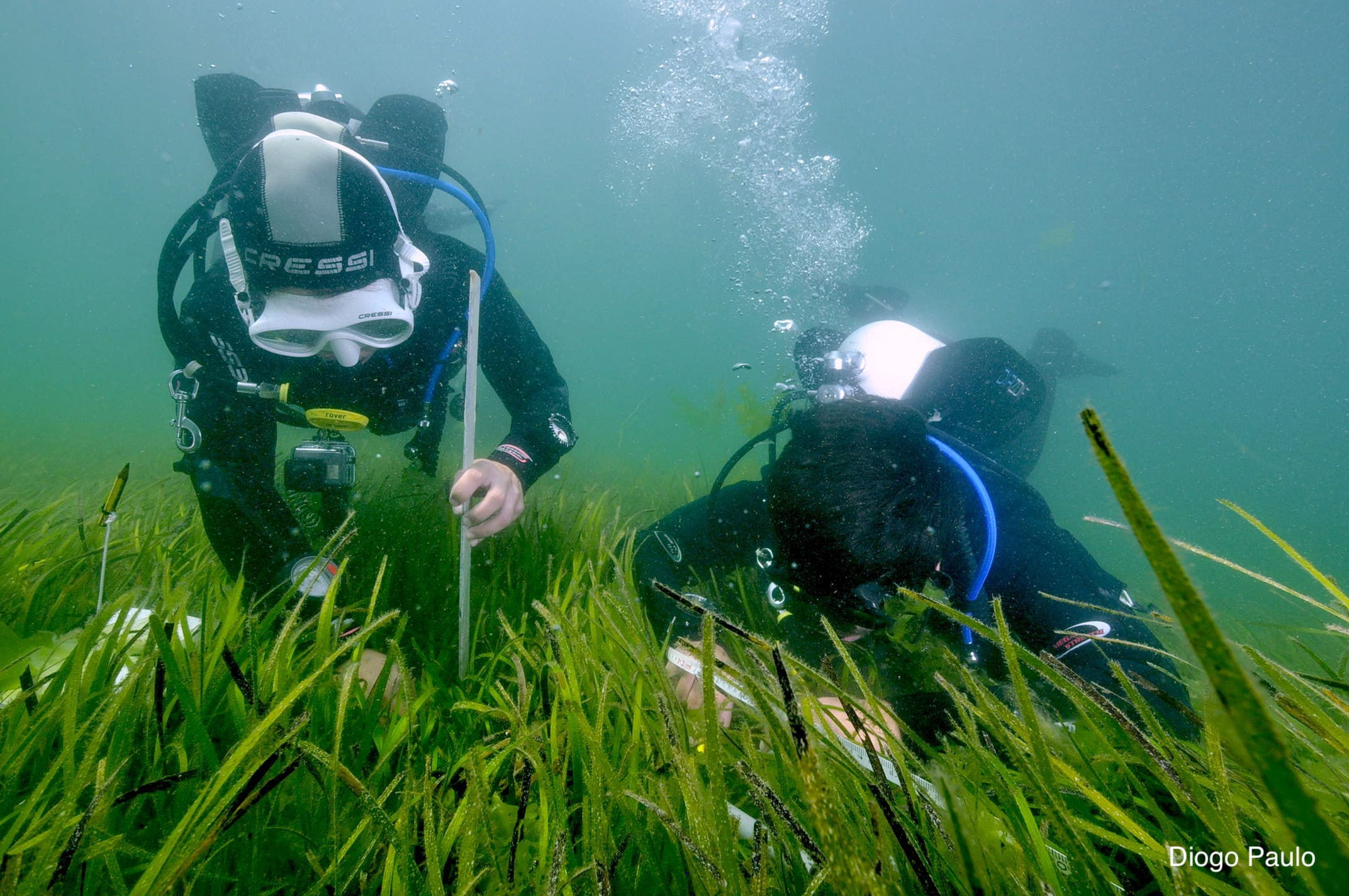

Restoration: Giving Back to the Sea What Was Taken From It
Where threats are controlled, seagrass meadows can recover—but they rarely do so on their own, or quickly enough. Active restoration — through transplantation, plant cultivation, and the rehabilitation of degraded habitats — accelerates this process. It is demanding, science-based work, but the results are already visible.
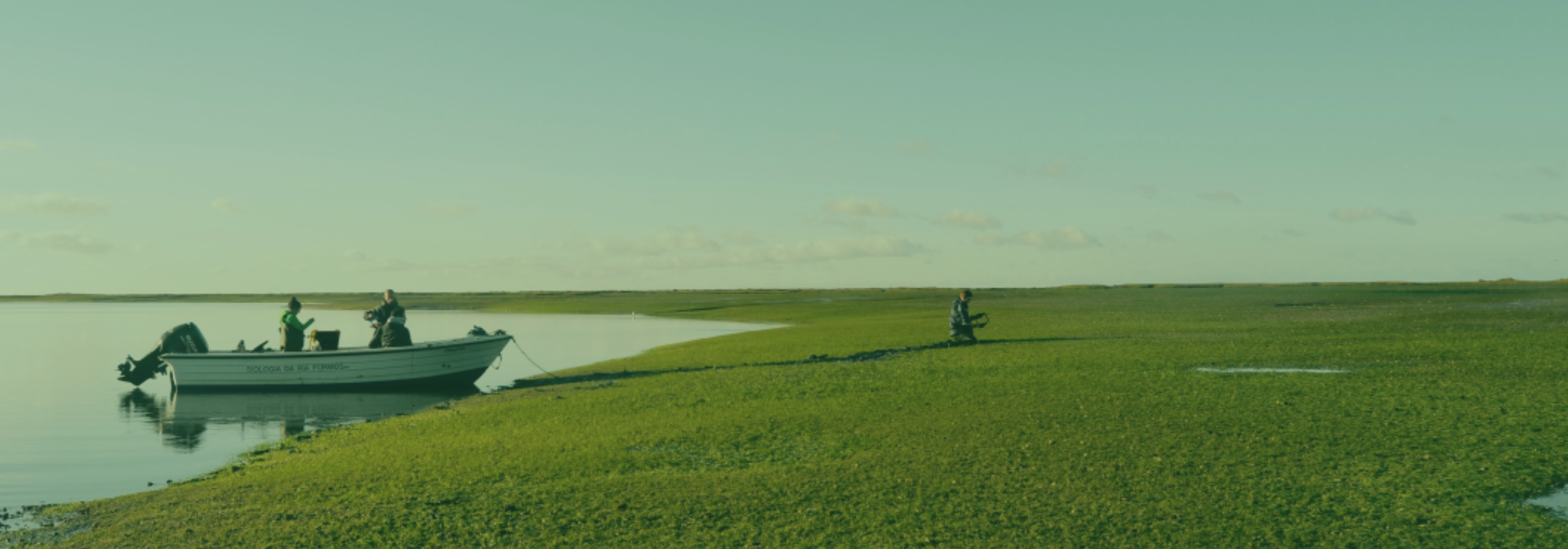

Science and community working together for the ocean: the RESTORESEAGRASS project was created to reverse the loss of seagrass beds along Portugal’s coastline. The mission is clear: to restore hectares of subtidal seagrass beds in the Ria Formosa, Arrábida, and the Sado Estuary. And to create a conservation model based on science and community participation that can be replicated in other Atlantic regions.
Three Areas, Three Challenges
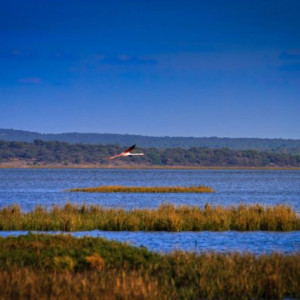
The project focuses on three Portuguese coastal areas with seagrass beds of high ecological value — each with its own challenges, species, and history.
Four Areas of Action
Each region faces different challenges: distinct species, specific threats, and local communities with their own histories. But in all of them, we follow the same four approaches, adapted to the local context. Because there is no one-size-fits-all solution for conserving grasslands - there are principles that must be applied thoughtfully.

Restore and Cultivate
We plant and restore grasslands using transplants and innovative cultivation techniques in salt flats, creating a sustainable source of plants to support long-term restoration efforts.

Removing threats
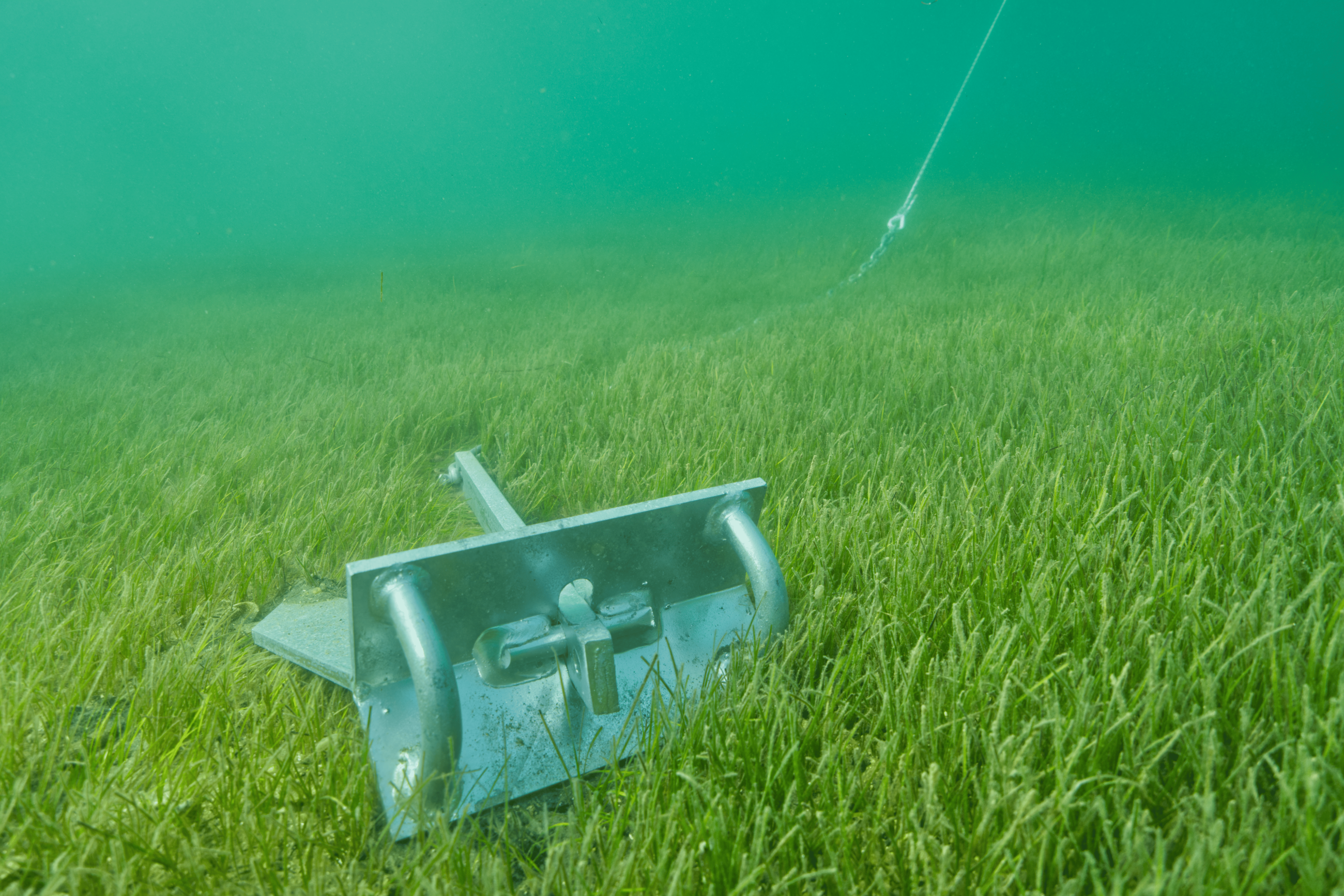
We work with authorities to mitigate specific impacts, such as ensuring that anchorage boundaries do not overlap with sensitive seagrass beds.
Monitoring
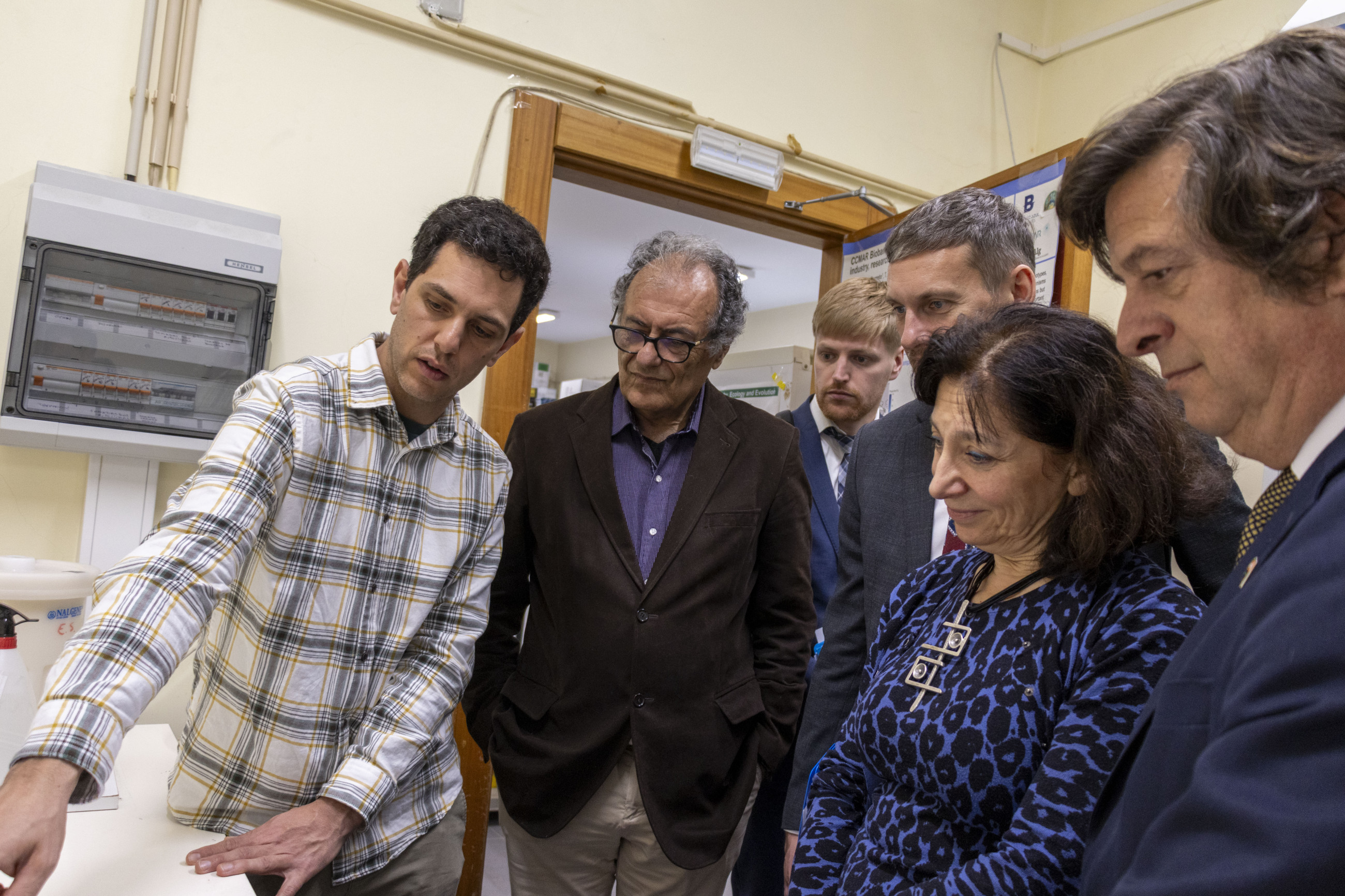
Without data, there can be no conservation. We regularly monitor the condition of the grasslands: their size, density, health, and biodiversity. This allows us to understand what is working and adjust our strategies in real time.

Engaging the community
Volunteers, schools, fishermen, and local communities are all part of the project. Because protecting the ocean is everyone’s responsibility.
Join us.


RESTORESEAGRASS: a partnership dedicated to the ocean
RESTORESEAGRASS is co-funded by the European Union’s LIFE program and focuses on areas within the Natura 2000 network. It is led by CCMAR, an institution with a history of seagrass conservation dating back to 2007, as part of the BIOMARES program. It has local funders rooted in each region — Faro Airport in the Ria Formosa and Secil in Arrábida and the Sado — and a broad network of scientific, institutional, and business partners: ISPA, ICNF, SPEA, OceanAlive, CSIC, Necton, and Pescalgarve.
Partners






Financing