Ria Formosa: a treasure worth protecting
Seagrass meadows
of Ria Formosa
The Heart of Portugal’s Seagrass Beds
The Ria Formosa is much more than just an iconic Algarve landscape. It is one of Europe’s most important coastal lagoons, a Natural Park since 1987, and part of the Natura 2000 Network. It is home to Portugal’s largest expanse of seagrass beds: an ecological treasure that supports the biodiversity, fishing, and tourism of the entire region.
1,230 hectares: Portugal’s largest seagrass meadow
The Ria Formosa encompasses approximately 1,230 hectares of seagrass meadows—99% of all seagrass meadows in the Algarve and the largest expanse in the country. This scale gives it a unique position nationally and explains its importance as a priority area for the RESTORESEAGRASS project.
Three habitats, three plant communities
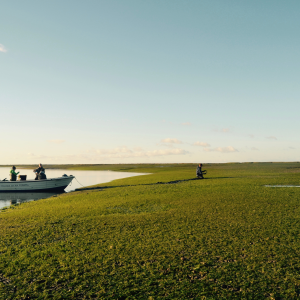
Intertidal zone
It is dominated by Zostera noltei, which covers approximately 1,033 hectares of the mudflats exposed at low tide. It is the hardiest of the three species and the only one that is not threatened in Portugal.
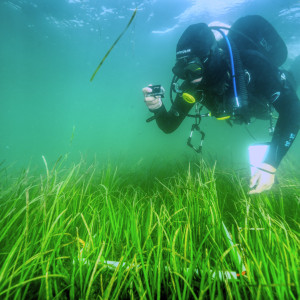
Subtidal zone
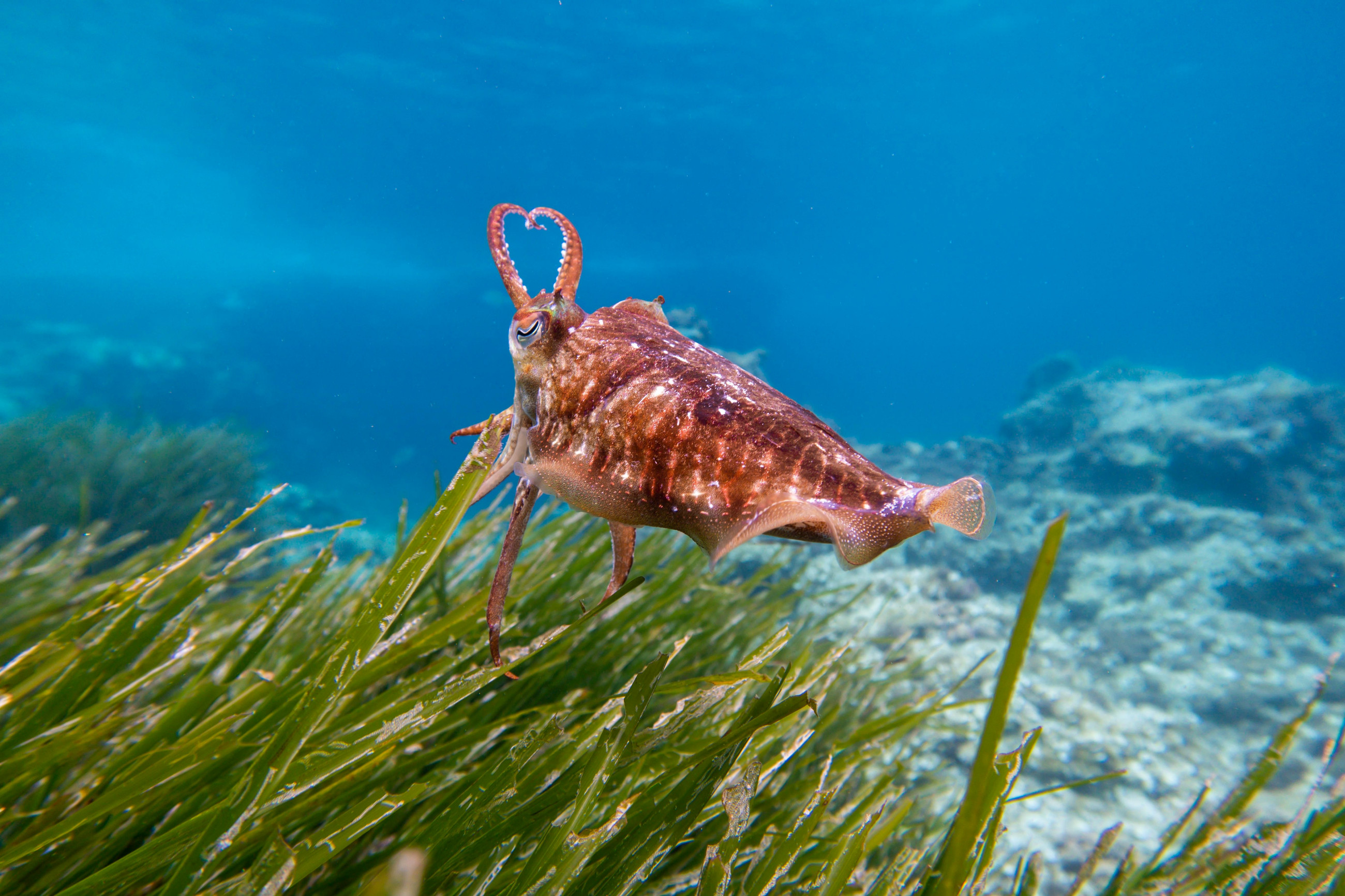
A total of 48 subtidal seagrass beds, consisting of Cymodocea nodosa and Zostera marina, were identified, covering approximately 70 hectares. Many of these form mosaics with the invasive seaweed Caulerpa prolifera.
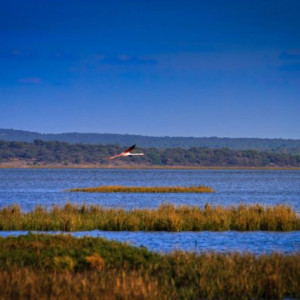
Lagoon habitats
In the more sheltered areas, rare species such as Ruppia drepanensis and Althenia filiformis also thrive; these plants are adapted to extreme conditions and are unique in Brazil.
Explore the seagrass beds of the Ria Formosa
The RESTORESEAGRASS project has mapped the seagrass habitats of the Ria Formosa in detail. Explore the map and discover the distribution of the 48 identified subtidal seagrass beds — invisible from the surface, but essential to life in the coastal lagoon.

A Treasure Under Pressure
The beauty of the Ria Formosa hides a troubling reality. Its intensive human use — from navigation and fishing to tourism, aquaculture, and coastal construction— places mounting pressures on the seagrass beds that are not always visible on the surface. Data collected by the project between 2023 and 2025 reveal a trend that must be halted immediately.
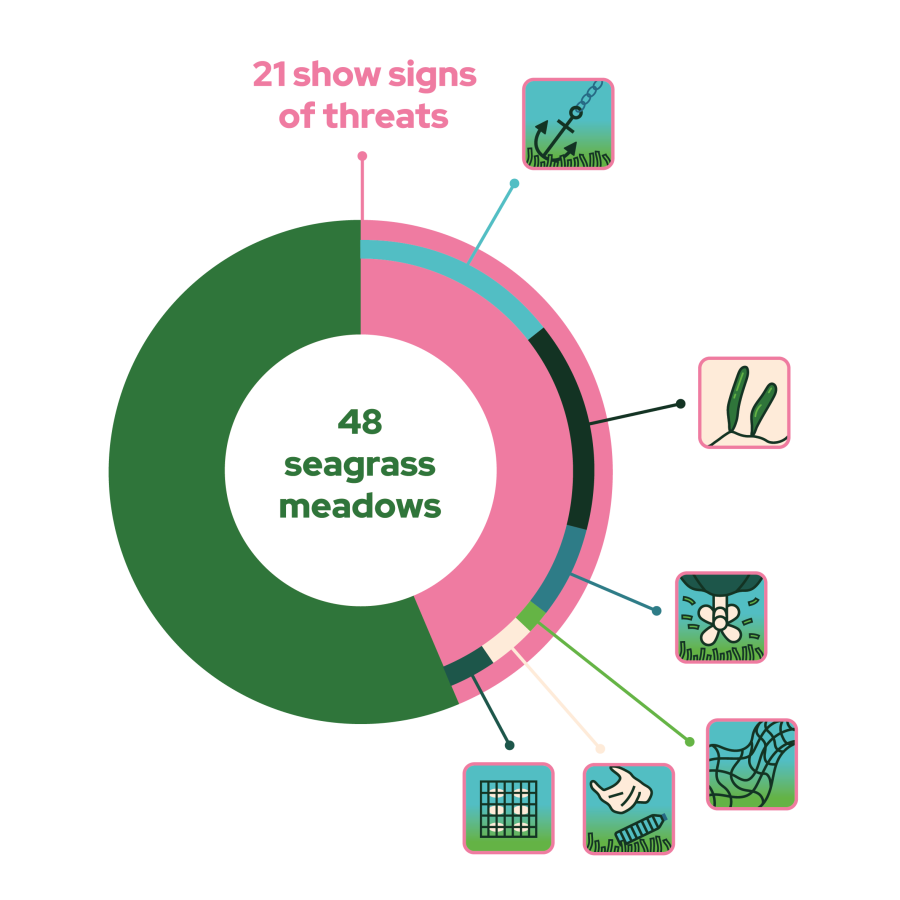
Nearly half of the seagrass beds show signs of threat
Of the 48 subtidal seagrass beds surveyed, 21 show visible signs of human impact: anchors, propeller marks, invasive algae, abandoned nets, and debris on the seabed. Unregulated anchoring — both legal and illegal — is the primary cause identified. It is a problem that is silently spreading across the seabed of the estuary.
An 8.5% loss in just two years
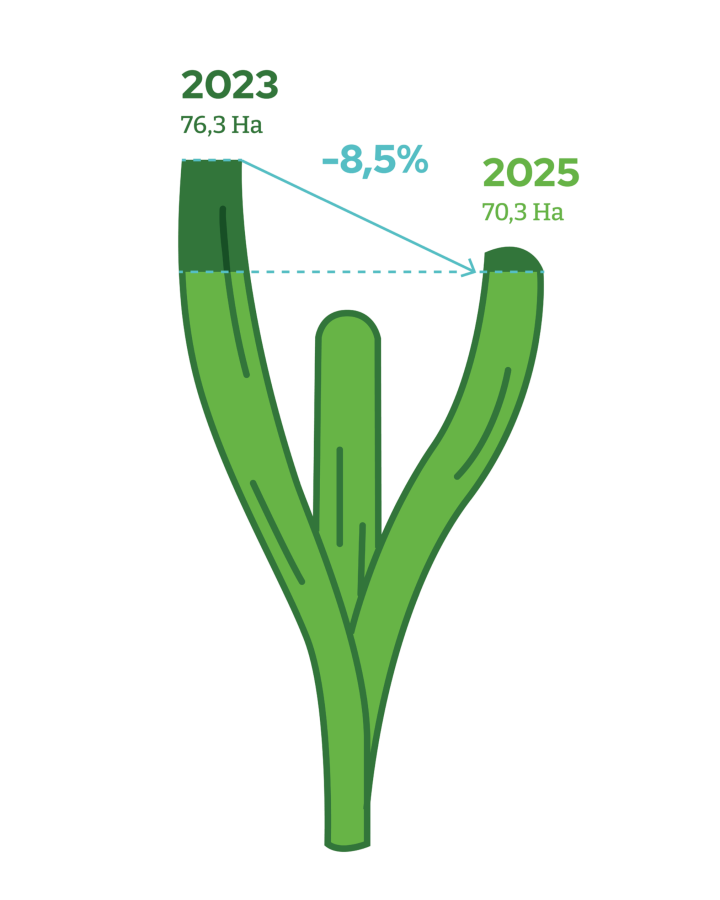
Between 2023 and 2025, the subtidal seagrass beds of the Ria Formosa shrank from 76.3 to 70.3 hectares. This 8.5% loss over two years represents decades of slow growth and is unlikely to recover without active intervention. That is why the RESTORESEAGRASS project is here
What we are doing to protect the Ria Formosa
Continuous monitoring, active restoration of salt marshes, removal of invasive species, and working with local communities. There is much to be done, and the first results are already visible.