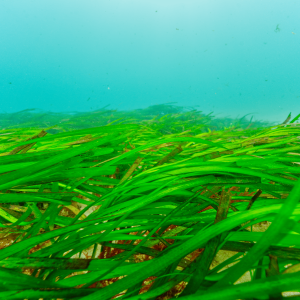
Silent protectors
Silent
protectors
Much more than just plants
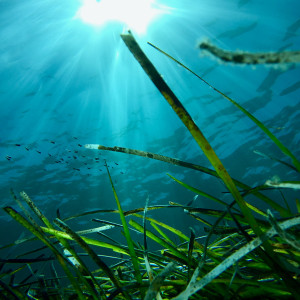
Seagrass beds provide invisible yet essential services. They prevent coastal erosion, clarify the water, oxygenate the sea, and filter out excess nutrients. They are natural infrastructure that protects ecosystems and the human communities that depend on them.
A living barrier against erosion
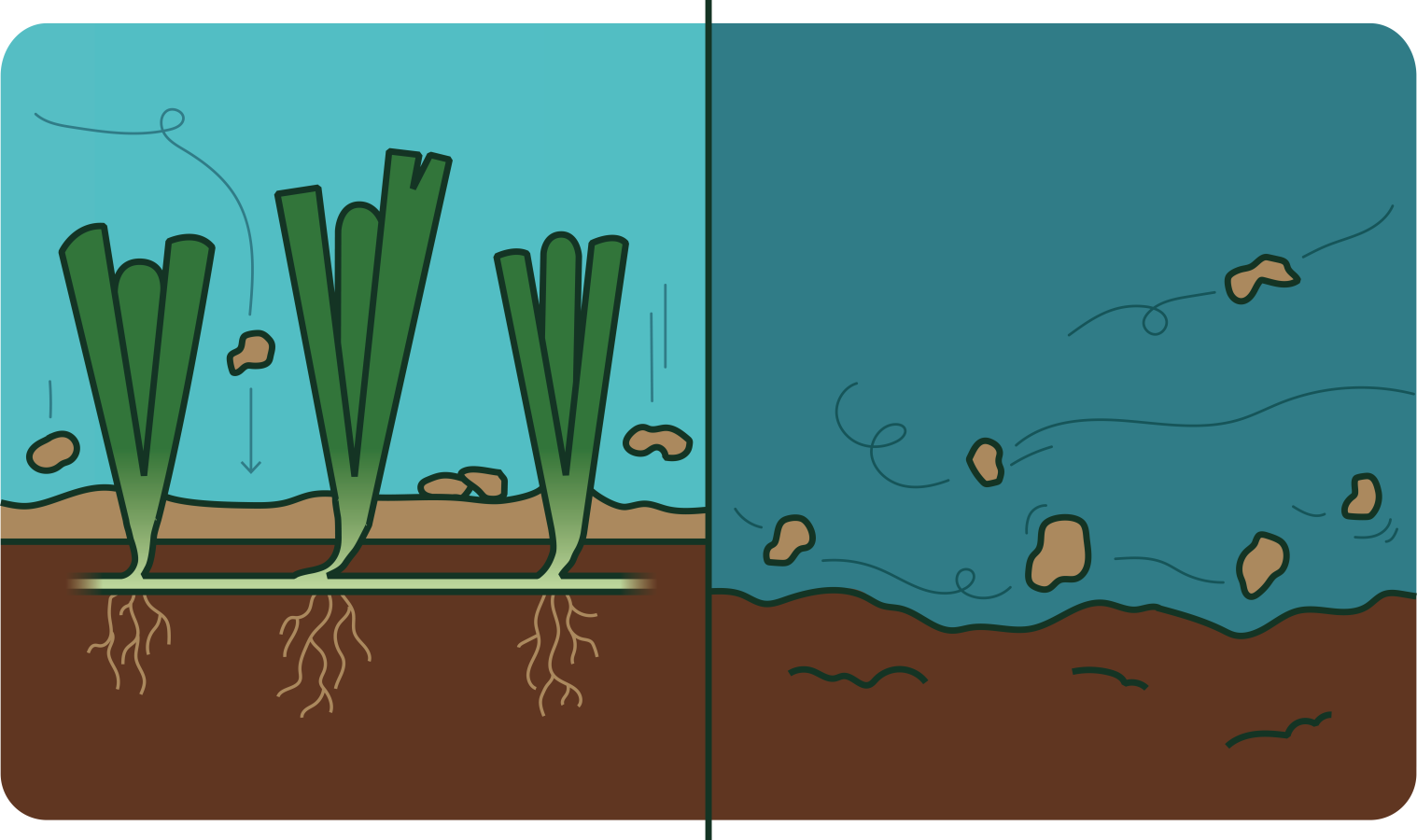
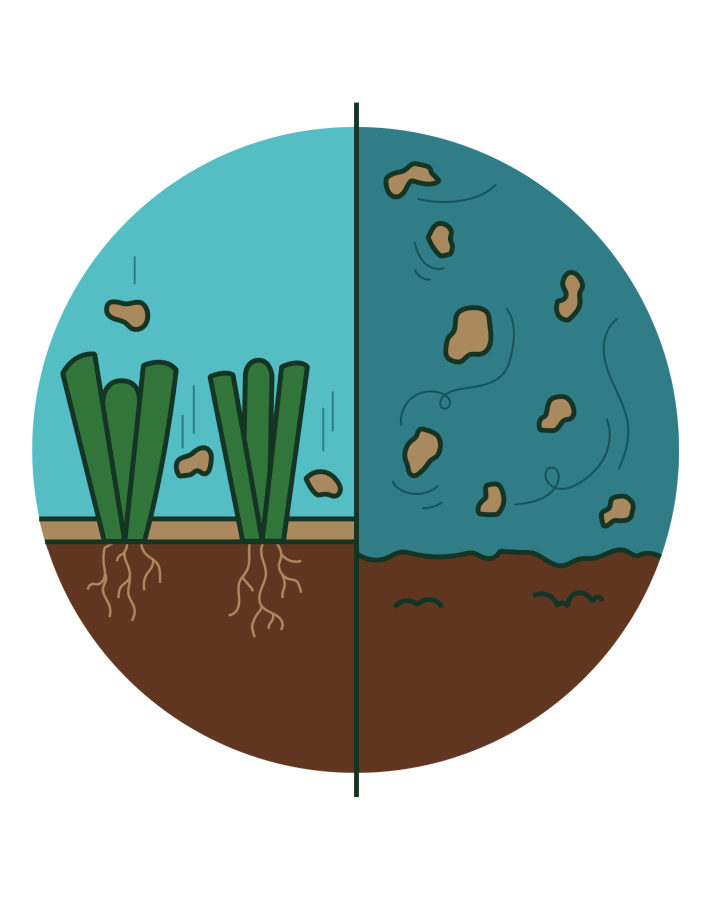
The leaves of seagrasses slow down the speed of the water and currents, while the roots and rhizomes anchor sediments to the seabed. The result? Less erosion, more stable seabeds, and better-protected coastlines. Without seagrass meadows, sediments drift away, and eroded seabeds do not recover easily.
Clearer water, a healthier ocean
Seagrasses act as natural filters: their leaves trap suspended particles and allow them to settle to the bottom. The result is clearer water—which benefits not only the plants themselves, which need light to grow, but the entire ecosystem around them.
Underwater oxygen factories
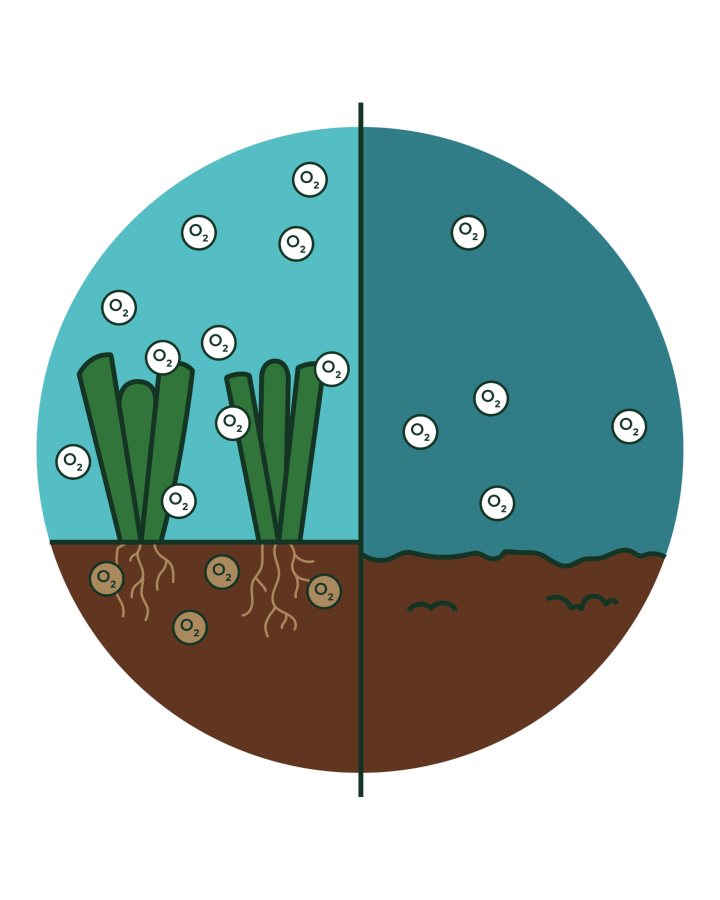
Through photosynthesis, seagrasses release oxygen directly into the water and sediment. This oxygen is essential for marine life — fish, invertebrates, and microorganisms that inhabit the seagrass beds depend on it to survive.
Less pollution, more balance
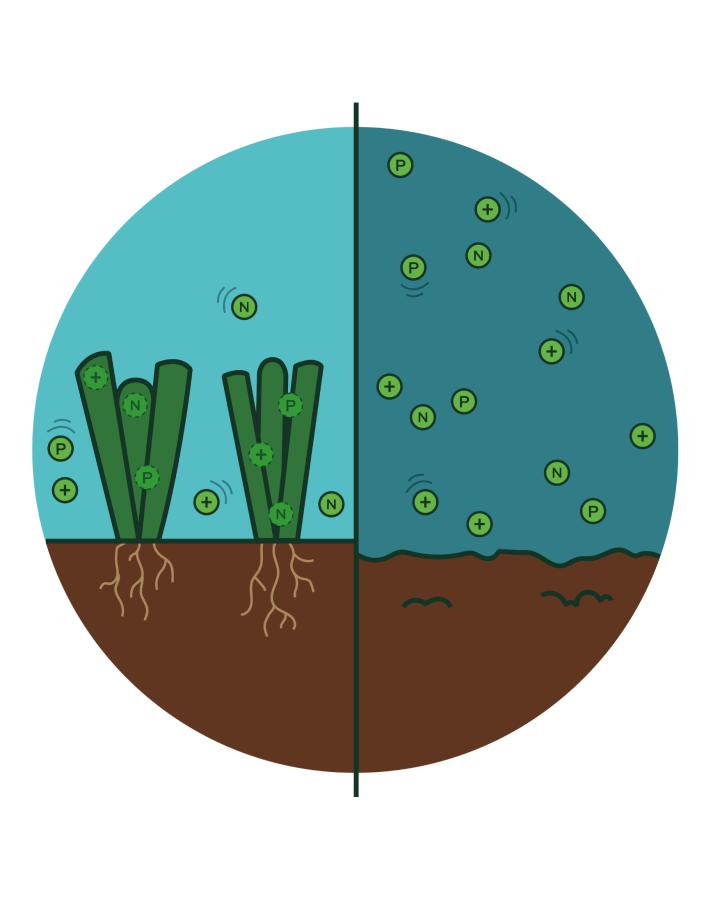
Seagrasses absorb nitrogen and phosphorus from the water — nutrients that, in excess, cause algal blooms and the degradation of coastal ecosystems. By removing these nutrients from the water column, seagrass beds help maintain the chemical balance of the sea and curb eutrophication.
Plants that transform the sea
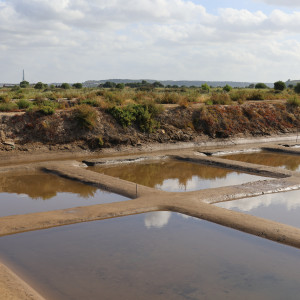
Over decades, seagrass beds actively shape the coastal landscape. The sediments they trap and the organic matter they accumulate gradually transform the shape of the seafloor and lagoons. Where seagrass beds thrive, the coastal environment becomes more stable, more fertile, and more resilient to rising sea levels.