Stopping the spread
Stopping the spread
of Caulerpa prolifera

The silent invader that is choking the seagrass beds of the Ria Formosa
The greatest threat does not always come from outside the sea. Caulerpa prolifera is a green algae native to the Mediterranean that, in recent decades, has become one of the main threats to the subtidal seagrass meadows of the Ria Formosab— silently spreading across the seabed and taking over the space of native seagrasses.
An algae, a mat, a threat
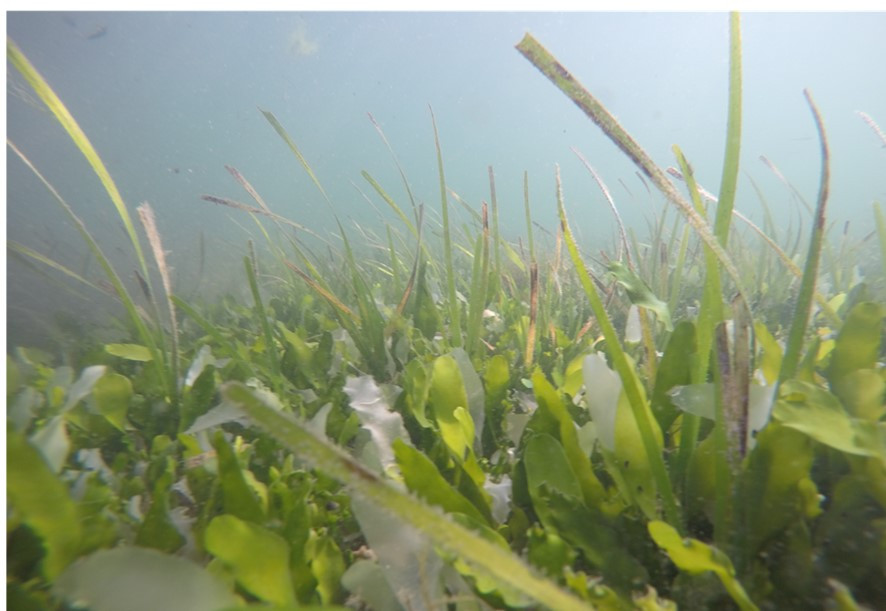
Caulerpa prolifera forms dense mats that compete directly with Cymodocea nodosa for space and nutrients in the sediment. In invaded areas, the density and health of seagrasses decline significantly. The algae spreads with particular vigor in degraded areas — where the water is less transparent and the sediment contains more organic matter, conditions often created by dredging.

9 out of 48 seagrass beds already invaded
The 2025 survey detected the presence of Caulerpa prolifera in 9 of the 48 subtidal seagrass beds in the Ria Formosa. In many of them, the algal mats are already more extensive than the native seagrass beds they are replacing.
Remove, monitor, restore
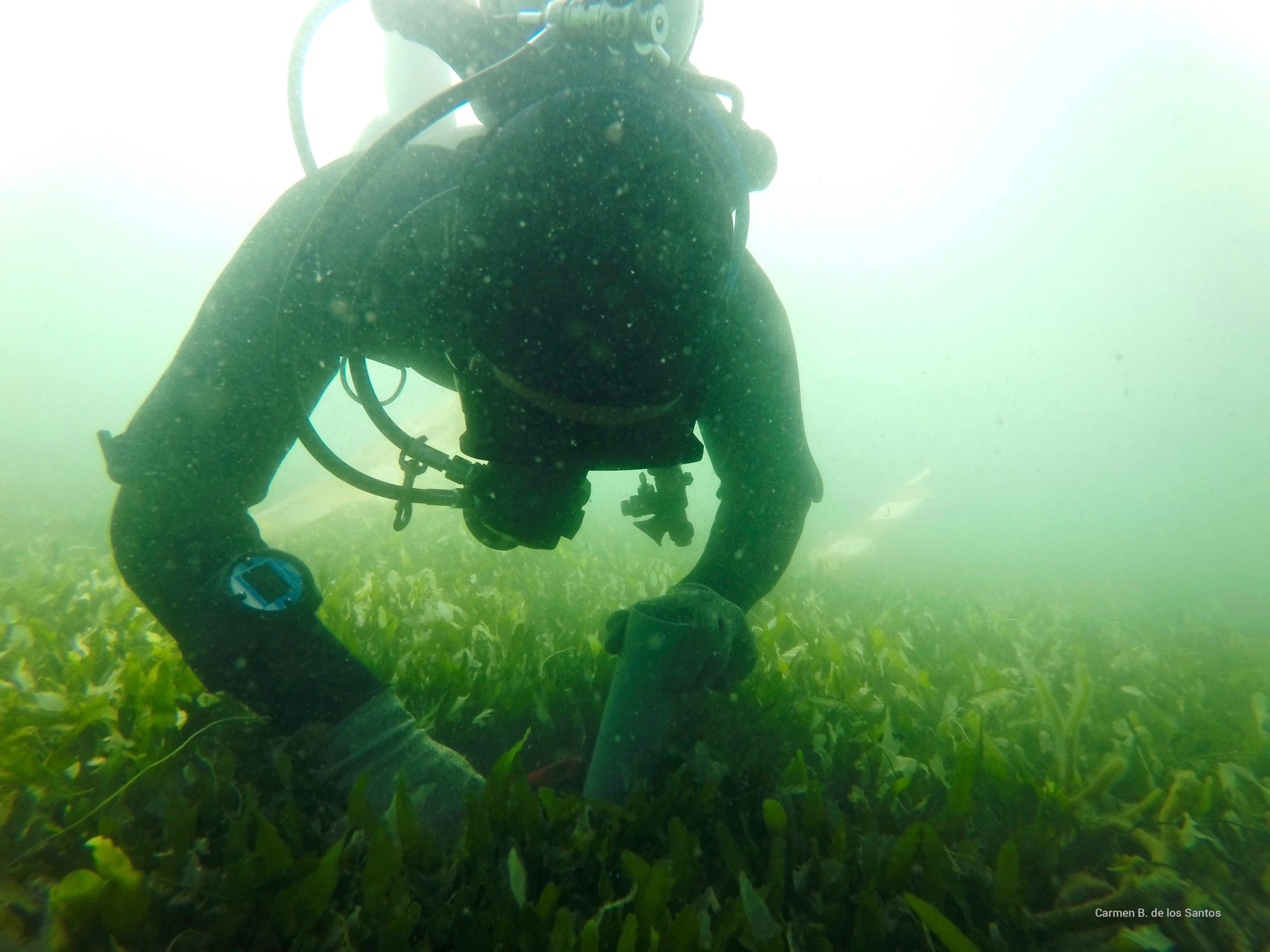
We are testing methods for manually removing Caulerpa prolifera in experimental plots, assessing the recovery capacity of native seagrass beds following intervention, and determining whether this removal impacts seagrass populations. It is patient and methodical work — continuous monitoring will reveal the most effective strategy for curbing this invasive species and restoring space to the seagrasses.
A battle worth fighting?
Removing invasive species is one of the most challenging aspects of marine conservation. But where conditions improve and human pressure eases, seagrasses are able to recover. Our goal is not just to remove Caulerpa prolifera — it is to create the conditions for native seagrass meadows to thrive once again on their own.